Address
304 North Cardinal
St. Dorchester Center, MA 02124
Work Hours
Monday to Friday: 7AM - 7PM
Weekend: 10AM - 5PM
Address
304 North Cardinal
St. Dorchester Center, MA 02124
Work Hours
Monday to Friday: 7AM - 7PM
Weekend: 10AM - 5PM
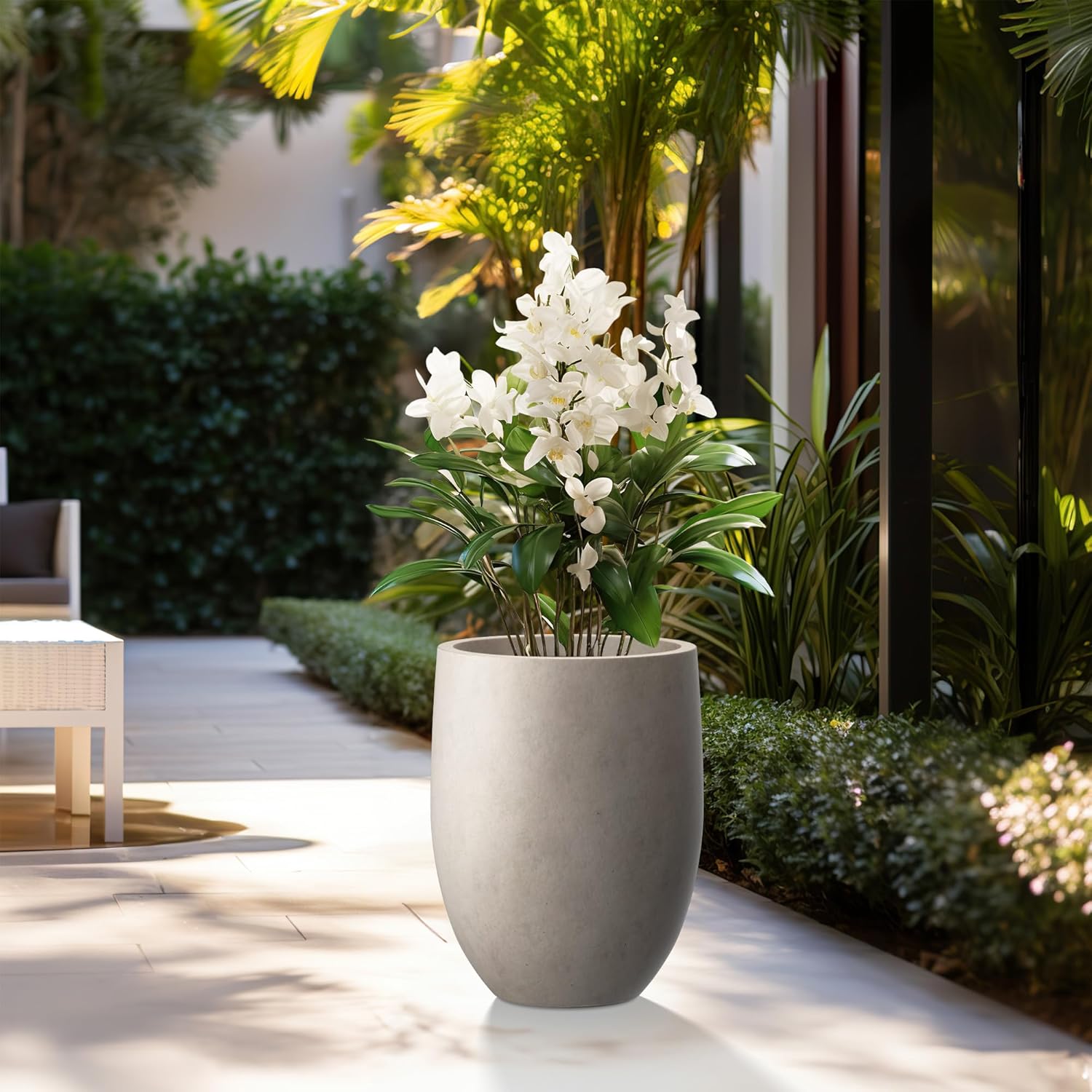
You’ve been scrolling through home and garden inspiration photos for weeks. The look you keep coming back to? Those elegant, tall cylindrical planters with that weathered concrete finish — the ones that make a patio look like it was styled by a landscape architect. Real concrete versions of that look cost hundreds, weigh a hundred pounds, and crack the moment a cold winter sets in.
So when the Kante 21.7″ Weathered Concrete Tall Planter pops up at a fraction of the cost with thousands of positive reviews, it’s naturally tempting. But there are some critical things to know before you buy — including one deal-breaker for buyers in cold climates that doesn’t get enough attention.
This review covers everything: the real materials, the real weight, what buyers genuinely love, and the specific situations where this planter disappoints.
👉 Check the current price and color options on Amazon → (affiliate link)
Who it’s for: Homeowners and renters in mild-to-moderate climates who want the sophisticated look of concrete planters without the weight, fragility, or price tag of the real thing — for patios, porches, entryways, or as a striking indoor statement piece.
Biggest Pros:
Biggest Cons:
Quick Verdict: In zones 8–10 (mild winters or nearly frost-free), this planter is an excellent investment — it looks expensive, holds up well, and transforms a space. In zones 5–7 (harsh winters, hard freezes), bring it inside for winter or accept it may crack. If you’re in a cold climate, use it as an indoor planter only, or budget to replace it every few seasons.
The Kante 21.7″ Weathered Concrete Tall Planter is a large-format, indoor/outdoor decorative planter made from a hybrid concrete-and-fiberglass composite material designed to replicate the look and texture of real concrete at a significantly lower weight and cost.
It is part of Kante’s extensive planter lineup, which spans from small tabletop sizes to large statement-scale pots across a wide range of colors and finishes.
Key specifications:
This is the most important thing to understand about any Kante planter, and it’s worth going deeper than the marketing language.
These planters are made from what the industry calls fiberclay — a composite of cement/concrete and fiberglass. This material was developed specifically for the decorative planter industry to offer the visual authenticity of concrete with three practical advantages: lower weight, better resistance to chip-and-crack damage in transit, and the ability to be handmade into more varied shapes.
What fiberclay does well: it genuinely looks like real concrete. The pores, the texture, the color variation — all of it. Buyers who receive these planters and show them to friends or guests frequently report that no one guesses they’re not pure concrete. The material also handles UV exposure and general rain/wind well.
What fiberclay does not do well: it is not fully freeze-proof. Unlike properly formulated concrete or fiberglass-only products, the cement component in fiberclay absorbs moisture. When that moisture freezes and expands, it can fracture the material from the inside out. This is not a Kante-specific problem — it’s a characteristic of the material class. Any fiberclay planter left outdoors in a hard-freeze climate without protection is at risk.
At 17″ × 17″ × 21.7″, this is a substantial planter. It has the presence to anchor an entryway, frame a front door with a pair, or serve as a freestanding statement piece in a living room or office. The interior volume is generous enough for small trees, large tropical plants, ornamental grasses, and ambitious container gardens.
The tall, tapered silhouette is the design centerpiece — it reads as architectural rather than purely decorative, which is why these planters pair so well with modern, minimalist, and contemporary spaces.
The included rubber plug system is a genuinely thoughtful design feature. The drainage hole at the base means the planter functions correctly for outdoor use with water-loving plants — soil can drain and roots won’t drown. Pressing in the rubber plug converts it to a closed-bottom vessel for indoor use on sealed floors, countertops, or wood surfaces. This dual functionality without any modification is a real practical benefit.
The “weathered concrete” colorway delivers the most popular aesthetic in modern garden design: a medium-gray concrete tone with a slightly irregular surface, subtle pore texture, and a finish that looks like it has aged naturally in an outdoor setting. This finish reads as authentic, sophisticated, and versatile — it pairs with virtually every décor style and every plant type.
One note: the surface is smooth rather than rough. Buyers accustomed to rough, sand-texture concrete may find this a stylistic difference. It is not a flaw — it’s a deliberate finish choice — but it creates a more refined, polished look rather than a raw industrial one.
👉 See current pricing and available colors on Amazon → (affiliate link)
Perfect for:
Not the best fit for:
The review pattern for the Kante 21.7″ Tall Planter across Amazon, Wayfair, and Home Depot is remarkably consistent — and the split between positive and negative feedback follows a clear geographic and use-case pattern.
The aesthetic satisfaction is genuine and near-universal. Buyers across every platform consistently describe the planter as beautiful, surprisingly realistic, and more impressive in person than in photos. “Love it, better than I thought it would be” is not a one-off comment — it’s the dominant voice of buyers who receive their planter intact. The combination of the tapered silhouette, visible-pore texture, and neutral weathered-gray finish creates a planter that genuinely reads as expensive and professionally designed. Buyers consistently note that guests and visitors don’t identify it as a composite material.
The lightweight reality has two reception modes. For buyers who were anticipating the weight of solid concrete and received something significantly lighter, there’s occasional disappointment. For buyers who knew it was a composite and valued the mobility advantage — being able to move a large planter by themselves, reposition it seasonally, or transport it — the weight is a feature, not a bug. Setting realistic expectations on weight beforehand resolves most of this tension.
The freeze-damage pattern is the most serious long-term concern. The complaints about winter damage are specific, detailed, and credible. A buyer who invests in protective wrapping and still has their planters fail after two cold winters is conveying a material limitation, not a use-error. Fiberclay is genuinely not rated for repeated freeze-thaw cycles, and buyers in the northern tier of the United States need to either use these as indoor planters year-round or accept seasonal replacement.
Shipping damage is manageable with the right response. The packaging is generally adequate and many units arrive perfectly. When damage does occur, Kante’s stated customer service policy is a full refund or replacement for dissatisfied customers. Buyers who contact customer service promptly with photos of damage report positive resolutions. The key is to open and inspect the item immediately rather than discarding packaging, and to photograph any issues before they become return logistics challenges.
Overall satisfaction: Positive, with meaningful caveats. The 4.3-star average across nearly 1,000 Amazon reviews reflects a product that genuinely delivers on its primary promise (attractive appearance, manageable weight, drainage functionality) while having specific documented limitations (freeze damage, shipping fragility).
Most praised: Visual appearance, in-person elegance exceeding photo expectations, lightweight mobility, drainage hole functionality, neutral versatile color.
Most complained about: Freeze and cold-weather damage, shipping damage on arrival, visible manufacturing seam, lighter feel than expected.
Review authenticity: The review pattern is genuine and specific — buyers describe actual experiences with real context (climate, plant type, interior/exterior use, comparison to solid concrete). The negative reviews contain the kind of detail (specific temperature zones, number of seasons, specific damage patterns) that is consistent with real experiences rather than fabricated complaints.
The Kante 21.7″ Tall Planter occupies an interesting position in the planter market. It’s not the cheapest large planter available — but it’s not trying to be. It competes on aesthetics and the concrete-look finish.
Compared to real concrete planters: Genuine poured concrete planters in this size range start at $150–300 and go significantly higher for designer pieces. They weigh 40–100+ lbs, making them essentially permanent fixtures. They are also susceptible to freeze cracking in harsh climates. The Kante offers a nearly identical aesthetic at lower cost and a fraction of the weight.
Compared to standard plastic planters: Plastic planters at similar price points are usually lighter, more durable in all weather conditions, and available in more sizes — but they don’t come close to the visual impact of the Kante’s finish. If aesthetics matter and your climate is mild, the Kante wins on appearance every time.
Compared to premium resin/fiberglass planters: High-quality all-fiberglass planters (from brands like Crescent Garden or Veradek) offer better freeze resistance and similar aesthetics but typically cost more. These are worth considering if you’re in a climate with hard winters.
The honest value math: In a mild climate, this planter is excellent value — it looks like a $200+ piece and functions reliably. In a cold climate where it will fail after one or two winters outdoors, the value calculation shifts significantly. The key is matching the product to the use case.
vs. Pure plastic/resin planters: Standard plastic and resin planters are freeze-proof, UV-resistant, and very lightweight. They don’t crack. But they look like plastic, and no amount of texture or paint fully replicates the authenticity of the Kante’s fiberclay surface. For buyers who prioritize durability above all else, plastic wins. For buyers who prioritize appearance, Kante wins in mild climates.
vs. Fiberglass-only planters (Crescent Garden, Veradek): Premium fiberglass planters use a different composite that handles freeze-thaw cycles better than fiberclay. They’re typically more expensive. If you’re in zone 6 or colder and want a permanent outdoor planter, this category is worth the price premium.
vs. Genuine concrete planters: True concrete offers real concrete aesthetics, serious weight and permanence, and — contrary to intuition — is also susceptible to freeze-thaw damage over time. Real concrete is 3–5x heavier, harder to move, and typically much more expensive. It’s the right choice for a truly permanent installation in a protected area.
vs. Terracotta/ceramic planters: Traditional terracotta is beautiful in its own right but extremely fragile in freezes, heavy, and lacks the modern minimalist aesthetic of the Kante. For traditional garden aesthetics, terracotta wins. For modern/contemporary spaces, Kante wins.
Q: Will the Kante 21.7″ planter crack in cold weather? This is the most important question for many buyers. Yes — there is a documented pattern of fiberclay planters cracking when left outdoors in climates with hard freeze-thaw cycles. Buyers in zones 1–6 (cold winters, hard freezes) should either use this planter indoors year-round, bring it inside before first frost each winter, or accept that it may develop cracks after one or two outdoor winters. In zones 7–11 (mild winters, minimal freeze), the planter holds up well.
Q: Does it actually look like real concrete? Yes, more than most buyers expect. The combination of the weathered-gray color, surface texture, and visible pores creates an appearance that consistently fools people who haven’t been told it’s a composite. It’s smooth rather than rough, which reads as refined concrete rather than raw industrial concrete. Both looks work well in modern spaces.
Q: How heavy is it? Lighter than it looks — which is the whole point. Exact weight varies but it’s dramatically lighter than solid concrete. A single person can move it when empty. When filled with soil and a large plant, you’ll want a helper, but the base planter is entirely manageable.
Q: Can I use it indoors on hardwood or tile floors? Yes. The rubber plug in the drainage hole converts it to a closed-bottom vessel for indoor use. No tray or saucer needed when the plug is in place. The smooth exterior won’t scratch flooring when slid carefully. When placed permanently, a furniture pad or planter caddy underneath is a good precaution.
Q: What size plants work in this planter? At 17″ × 17″ with a 21.7″ height, it has a generous interior volume suitable for small trees (ficus, citrus, olive), large tropical plants (bird of paradise, fiddle leaf fig, monstera), ornamental grasses, or ambitious mixed container gardens. It’s large enough to make a real statement with substantial plant material, not just small accent plants.
Q: What should I do if my planter arrives with cracks or damage? Inspect it immediately upon delivery before discarding packaging. Photograph any damage clearly. Kante offers full refund or replacement for unsatisfied customers — contact their customer service promptly with photos. Do not wait or discard the box, as this complicates the return process.
Q: Can I leave it outside through rain and summer heat? Yes — UV resistance and rain/wind performance are areas where this planter performs well. The issues arise specifically with freeze-thaw cycles in cold winters. General outdoor conditions in mild-to-moderate climates are handled reliably.
Yes — with one significant condition attached.
The Kante 21.7″ Tall Planter is one of the best-looking, most aesthetically convincing planters in its price category. It genuinely looks like real concrete. It moves like a manageable object. It accommodates large plants with room for healthy growth. The tapered silhouette and weathered finish make every space it enters look more intentional and designed. Buyers who receive it intact and use it appropriately are consistently delighted.
The condition: this planter’s value proposition depends almost entirely on your climate. In mild climates — Southern California, Texas, Florida, the Pacific Northwest, much of the Mid-Atlantic in temperate zones — this planter is an excellent investment that will hold up season after season. Use it as your permanent front porch anchor, your entryway statement piece, or your living room botanical focal point with confidence.
In cold climates with hard winters — New York, New England, the Midwest, anywhere that regularly sees temperatures below freezing for extended periods — treat this as an indoor planter or a seasonal outdoor piece that comes inside before frost arrives. Used this way, it’s still excellent value. Left outdoors through freeze cycles, it will likely disappoint within two seasons.
Know your climate, use the planter accordingly, and this is a genuinely beautiful addition to your space that consistently punches above its price.
👉 Check the current price, read recent reviews, and choose your color on Amazon → (affiliate link)
Disclosure: This post contains affiliate links. If you purchase through these links, we may earn a small commission at no extra cost to you. All opinions are based on genuine product research and verified customer review analysis.

