Address
304 North Cardinal
St. Dorchester Center, MA 02124
Work Hours
Monday to Friday: 7AM - 7PM
Weekend: 10AM - 5PM
Address
304 North Cardinal
St. Dorchester Center, MA 02124
Work Hours
Monday to Friday: 7AM - 7PM
Weekend: 10AM - 5PM
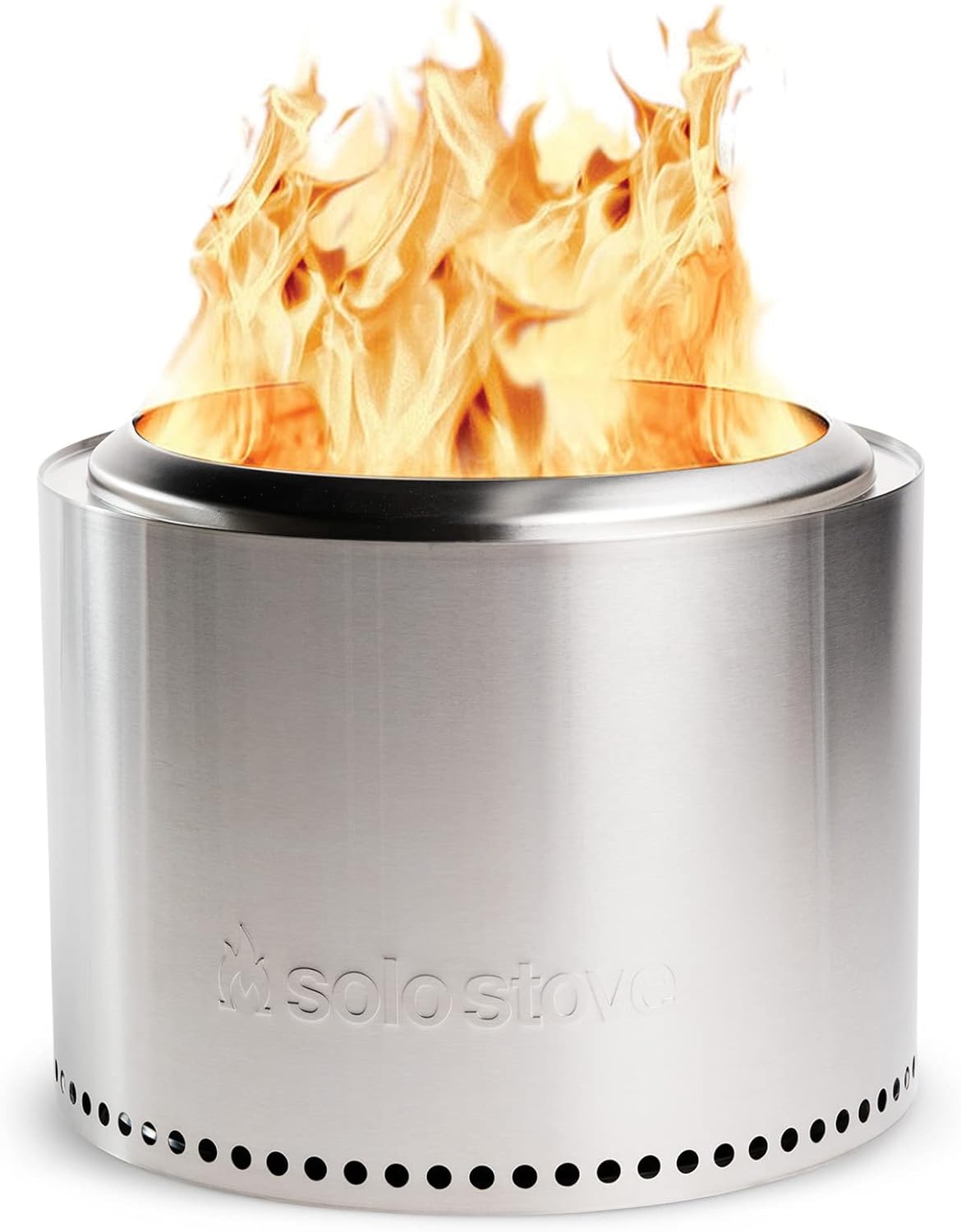
Every backyard fire pit you’ve ever sat around has had one thing in common: at some point, the smoke finds you. You shift your chair. The smoke follows. You shift again. It follows again. You end up with stinging eyes, hair that smells like you spent the night inside a chimney, and a genuine question about whether outdoor fires are actually worth the trouble.
That’s the exact frustration the Solo Stove Bonfire 2.0 was built to solve. And after digging through professional tests, thousands of verified buyer experiences, and independent reviews from publications that actually put this thing in a backyard and lit it up — here’s the full, unfiltered story.
👉 Check current price and color options on Amazon → (affiliate link)
Who it’s for: Backyard entertainers, camping enthusiasts, deck owners, and anyone who loves the ambiance of a wood fire but is done being smoked out of their own backyard.
Biggest Pros:
Biggest Cons:
Quick Verdict: If you want a real wood fire with near-zero smoke that looks great, lights in minutes, and cleans up easily — the Solo Stove Bonfire 2.0 earns its reputation. Just go in knowing the wood consumption rate, set realistic expectations about “smokeless” versus “significantly reduced smoke,” and budget for at minimum the heat deflector if warmth (not just atmosphere) is the goal.
The Solo Stove Bonfire 2.0 is a double-walled, stainless steel wood-burning fire pit designed around a patented secondary combustion system that burns off most of the smoke before it reaches the people sitting around it. The 2.0 is the updated version of Solo Stove’s flagship Bonfire model, with the key addition of a removable ash pan that addressed the original model’s most significant criticism.
Key specifications:
This is the engineering at the heart of the Bonfire 2.0, and it’s worth understanding before you dismiss “smokeless fire pit” as a marketing claim.
The double-walled design creates two air pathways simultaneously. Cool air is drawn in through perforated holes around the base of the outer wall. As the fire heats up, this air travels up through the gap between the inner and outer walls, getting superheated as it rises. At the top, it ejects through inner vent holes positioned just above the flame line — creating what’s essentially a ring of secondary combustion. This secondary burn ignites the smoke gases before they can escape.
Multiple professional testers describe being able to see this mechanism work in real time: a distinct secondary flame ring appears just above the fire pit’s opening, and the smoke that would otherwise billow out essentially vanishes into that second ignition. The result, once the fire reaches its operating temperature, is dramatically less smoke than any conventional fire pit.
The honest qualifier: Secondary combustion requires sufficient heat to sustain itself. During the first several minutes of lighting — and during the dying-down phase — the system isn’t fully engaged. You will see some smoke at startup and wind-down. Once the Bonfire is fully running, though, multiple independent testers and thousands of real users confirm the “almost smokeless” description is accurate in practice.
This is the single most significant improvement over the original Bonfire, and it’s a meaningful one. The original required you to turn the entire unit upside down and shake it to clear ashes — a process that scattered fine ash everywhere and required reasonable upper body strength. The Bonfire 2.0 adds a removable fire base (grate) that sits atop a pull-out ash pan. When you’re done and the pit has cooled completely, you reach in, lift out the grate, then pull the ash pan out for easy disposal.
Professional testers at Reviewed.com specifically flagged this as “fantastic news for anyone with limited strength” — and it genuinely eliminates the messiest and most physically demanding part of cleanup. One note from testing: be careful when removing the ash pan. If jostled, fine ash can spill beyond the pan’s rim. Slow and deliberate removal is the move.
The Bonfire 2.0 burns hot — very hot, very quickly. The oxygen-saturated double-wall design is, by its nature, a highly efficient combustion system. That means impressive flame height and heat output, but it also means you’ll burn through firewood faster than you’re used to with traditional fire pits.
Real-world burn data from users and testers: approximately one log every 20–30 minutes at full burn, with a full evening fire (3–4 hours) consuming roughly 3 bundles of standard firewood. That’s the honest consumption expectation. The upside is that when you’re done adding wood, the remaining pieces burn cleanly to fine ash relatively quickly rather than smoldering for hours.
Heat radius is approximately 3 feet in any direction from the fire pit’s edge. This is sufficient to comfortably warm 3–5 people in moderate conditions but falls short for large groups or very cold nights. Solo Stove sells a Bonfire Heat Deflector accessory that redirects the heat outward (instead of upward), meaningfully improving warmth for larger groups — it’s worth factoring into your budget if warmth is a priority over atmosphere.
The secondary combustion system works best with dry, seasoned hardwood. Wet wood, bark-heavy wood, or softwoods produce more smoke and prevent the system from reaching the temperatures needed for full secondary burn. Multiple users who report persistent smoke issues are almost always found to be using damp or unseasoned wood.
Best wood choices: Kiln-dried hardwood (oak, hickory, maple, ash), or any well-seasoned hardwood that has dried for at least a year. Avoid fresh-cut wood, wood with heavy bark, or any treated/painted wood. The investment in quality kiln-dried firewood pays dividends in how well the smokeless system actually works.
The Bonfire 2.0 weighs around 20–23 lbs. It comes with a heavy-duty carry bag. This makes it genuinely portable from storage to backyard, from the car to a campsite, or from home to a friend’s house for a party. For one person, it’s manageable over short distances. For longer carries, two people make it significantly more comfortable — the carry bag lacks a shoulder strap, which limits single-person carrying distance.
For camping specifically: this is suitable for car camping or base camp setups where you drive to a site and don’t need to carry the pit more than a hundred yards or so. It’s not a backpacking or hiking fire pit. But multiple users report taking it to campsites, beach bonfires, and tailgates with great success.
The stand was sold separately on the original Bonfire. Its inclusion with the 2.0 is a meaningful value addition. The stand elevates the fire pit off heat-sensitive surfaces — wooden decks, grass, composite decking — protecting them from heat damage and scorching. If you’re planning to use this on a deck, the stand is non-negotiable, and having it included rather than as a separate purchase makes the base price easier to justify.
👉 See current colors, bundle options, and pricing on Amazon → (affiliate link)
Perfect for:
Not the best fit for:
The Solo Stove Bonfire 2.0 has an unusually consistent positive review pattern — which usually signals either genuine excellence or fabricated reviews. In this case, the specificity and detail of the positive reviews, paired with equally specific and reasonable complaints, suggest genuine performance.
The smoke reduction experience is described consistently and specifically. Reviewers don’t just say “it works” — they describe specific moments: sitting around the fire for hours without repositioning, wearing the same clothes the next day without a campfire smell, being able to read next to it without eye irritation. This level of specific experiential detail is the hallmark of genuine satisfaction.
The upgrade from original to 2.0 generates the most enthusiasm. Buyers who owned the original Bonfire and upgraded to the 2.0 consistently describe the ash pan improvement as transformative — eliminating the most frustrating part of ownership. This is also the most credible validation of the upgrade: people who already trusted the brand, knew what to expect, and found the improvement genuinely meaningful.
The wood consumption reality catches people off guard. This is the most common theme in otherwise-positive reviews that knock off a star. Buyers who came from traditional campfires or gas fire pits are surprised by how quickly hardwood burns in the Bonfire. The honest answer is that this is an inherent feature, not a flaw — the efficiency that creates minimal smoke also accelerates combustion. Knowing it before the first session prevents frustration.
“Not truly smokeless” is the most common critical complaint — and it requires nuance. Some of these complaints come from users who genuinely experienced more smoke than expected. Reading through the details: the pattern is almost always one of two things — wet or damp wood, or evaluation during the startup phase before full secondary combustion is active. Buyers who use quality kiln-dried hardwood and evaluate the system only once fully established find the smoke reduction to be as dramatic as advertised.
The accessory ecosystem is both praised and frustrating. Buyers who went in knowing they’d want accessories (stand, heat deflector, shield) and budgeted for them are happy with the full setup. Buyers who thought the base unit would fully meet their needs and discovered accessories later are more likely to feel nickel-and-dimed.
Overall satisfaction: Exceptional — the Bonfire 2.0 holds a 4.8-star average across thousands of Amazon reviews, and professional testing organizations including OutdoorGearLab, Bob Vila, and NYT Wirecutter consistently rank it at or near the top of the smokeless fire pit category.
Most praised: Smoke reduction, lighting ease, aesthetic design, cleanup improvement (2.0 ash pan), portability, build quality, brand reputation and warranty.
Most complained about: Wood consumption rate, heat dispersion limits for large groups or cold weather, accessory costs, and the startup/wind-down smoke phases.
Review authenticity: The review pattern shows genuine specificity — positive reviews describe particular moments and use scenarios; critical reviews are specific about their complaints. The product has enough of a track record and third-party testing record to validate that the overwhelmingly positive sentiment reflects genuine performance.
The Solo Stove Bonfire 2.0 is priced at approximately $349.99 at full retail, though it frequently goes on sale. This puts it solidly in the premium tier for fire pits — not the most expensive option available, but significantly more than a basic bowl fire pit from a home improvement store.
Is the premium justified? The honest answer is yes — with caveats.
The price is more than reasonable given the innovative dual chamber design and the use of 304 and 430 stainless steel that should extend its lifespan if well maintained, according to testing by AmazingRibs.com’s BBQ specialists.
The comparison points that matter: A basic fire bowl from a big box store runs $50–150. It will rust, produce significant smoke, and need replacement in 2–3 seasons. The Bonfire 2.0, maintained properly and stored dry, is backed by a lifetime warranty and should last indefinitely. Over 5–10 years, the per-year cost of the Solo Stove is quite competitive — especially against the cost of a single professional pest control visit or exterminator contract that the same $350 might otherwise buy.
Where the value calculation gets complicated: accessories. If your realistic setup includes the heat deflector ($79.99), the shield/surround ($129.99), and a cooking hub ($79.99) plus grill top ($59.99), you’re looking at $700 total. Decide upfront which accessories you actually need — and price the total package, not just the base unit — before making the purchase decision.
vs. Breeo Fire Pits (direct premium competitor): Breeo makes excellent double-wall smokeless fire pits with a slightly different design that allows for cooking directly on the rim (the “sear plate” feature). Breeo is generally heavier and pricier, and made in the USA. The fire experience is similarly excellent. For backyard use with cooking in mind, Breeo’s built-in cooking surface is a genuine differentiator. For portability and clean design, Solo Stove edges out.
vs. TIKI Brand Smokeless Fire Pit (mid-range competitor): TIKI’s smokeless fire pits operate on similar double-wall principles at a lower price point. They perform reasonably well but don’t match the Solo Stove for smoke control, build quality, or brand support at the premium level. A solid option for buyers who want the technology at a lower price but are prepared for a step down in performance and durability.
vs. BioLite FirePit+ (tech-forward competitor): BioLite’s electric fan-assisted fire pit takes a different approach — using a battery-powered fan to force secondary combustion rather than relying on passive convection. It offers more consistent smoke control earlier in the burn (including startup), pairs with a companion app, and costs less than the Bonfire 2.0. The tradeoff is that it requires charging between uses and has a more mechanical feel. A strong choice for tech-forward buyers who want less smoke management; the Solo Stove delivers a more pure wood-fire experience.
vs. Traditional fire bowl pit ($50–150): Dramatically inferior for smoke control, durability, and aesthetics. The traditional pit wins on cost only. If smoke and cleanup are not pain points for you, a basic pit is entirely adequate. If they are, the Bonfire 2.0 addresses both.
vs. Gas fire pits: Gas fire pits offer convenience (instant on/off, no wood management) but sacrifice the authentic wood-fire experience — real flames, crackling sounds, smell, and s’mores capability. Gas also produces less ambient heat for the cost. For buyers who genuinely want a wood fire experience, the Bonfire 2.0 is meaningfully superior. For buyers who want push-button convenience and don’t care about wood fires specifically, gas makes sense.
Q: Is the Solo Stove Bonfire 2.0 really smokeless? Almost — with a specific qualifier. Once the fire is fully established and burning at operating temperature, the secondary combustion system burns off the vast majority of smoke. Most users describe it as nearly or completely smokeless at this stage. However, the first 5–10 minutes during startup, and the final period as the fire dies down, do produce some smoke. The key is allowing the fire to establish fully before evaluating the smoke performance, and using properly seasoned dry hardwood.
Q: How much wood does the Solo Stove Bonfire 2.0 burn through? More than a traditional campfire. The oxygen-rich combustion design is efficient — which means it burns hot and clean, but also burns wood faster. Expect roughly one log every 20–30 minutes at full burn. A 3–4 hour evening fire can consume approximately 2–3 bundles of firewood. Using kiln-dried hardwood helps maximize each log’s burn time and quality.
Q: Can I use the Solo Stove Bonfire 2.0 on a wood deck? Yes, but only with the stand. The stand (included with the 2.0) elevates the fire pit off the surface and prevents heat transfer to the deck. Multiple users confirm using it on wood and composite decking without damage. Solo Stove doesn’t make specific surface safety guarantees for liability reasons, but the stand’s purpose is exactly this.
Q: What wood should I use in the Solo Stove Bonfire 2.0? Dry, seasoned hardwood is essential for the smokeless system to work optimally. Kiln-dried hardwood (oak, hickory, maple, ash, or similar) is ideal. Well-seasoned wood that has dried for at least a year works well. Avoid wet or freshly cut wood, wood with heavy bark, or treated/painted wood. The quality of the wood significantly affects how “smokeless” the experience actually is.
Q: Is the Solo Stove Bonfire 2.0 portable enough for camping? Yes for car camping; no for backcountry or hiking. The Bonfire 2.0 weighs around 20–23 lbs and comes with a heavy-duty carry bag. It fits easily in a car trunk and can be carried short distances comfortably — making it excellent for car camping, beach fires, and tailgates. It’s not designed or practical for backpacking or any trip where you need to carry it significant distances.
Q: Does the Solo Stove Bonfire 2.0 rust? The stainless steel construction is corrosion-resistant, not rust-proof. Prolonged exposure to moisture — particularly if the fire pit is left outdoors uncovered in wet conditions — can cause surface staining or rust spots over time. The standard care advice: empty ash after every use (moisture trapped with ash accelerates corrosion), keep it covered when not in use with the included carry bag or a shelter accessory, and store dry when not in active use. Buyers who follow this care routine consistently report zero rust after years of use.
Q: What accessories does the Solo Stove Bonfire 2.0 need? The base unit comes with everything needed to use it as a fire pit (fire pit, stand, ash pan, fire base, flame ring, and carry bag). Accessories that meaningfully improve the experience include: the Heat Deflector (highly recommended for improving warmth for groups), the Bonfire Surround/Shield (recommended for households with children or pets), and the Bonfire Hub plus cooking attachments if cooking is a priority. None are required; all cost extra.
Yes — for the right buyer, this is the best fire pit you can buy.
The Solo Stove Bonfire 2.0 delivers on its central promise: a real wood fire with dramatically less smoke than any conventional pit, housed in a beautiful and durable package that cleans up in minutes and goes wherever you do. The Bonfire 2.0 exceeded high expectations and was one of the top models of the test group — between its impressive burn time, excellent smoke management, and well-crafted design, Solo Stove checked off all the boxes, according to outdoor testing specialists at OutdoorGearLab.
The qualifiers are real and worth respecting: use dry hardwood, accept that startup and wind-down phases produce some smoke, budget for wood consumption, and decide upfront whether you want additional accessories. The heat deflector in particular is worth serious consideration — it transforms the experience from “beautiful fire” to “warm fire” for larger groups on cool evenings.
But for anyone who has spent too many evenings shuffling their chair away from smoke, or too many mornings picking campfire smell out of clothes and hair, or simply anyone who wants a backyard fire that looks as good as it burns — the Bonfire 2.0 is the answer. The lifetime warranty, the premium stainless construction, the two-year Wirecutter endorsement, and the vast community of loyal repeat buyers all point the same direction.
It’s a genuine premium purchase. It earns its price.
👉 Check the current price, color options, and bundles on Amazon → (affiliate link)
Disclosure: This post contains affiliate links. If you purchase through these links, we may earn a small commission at no extra cost to you. All opinions are based on genuine product research, verified customer review analysis, and independent third-party testing data from multiple publications.

